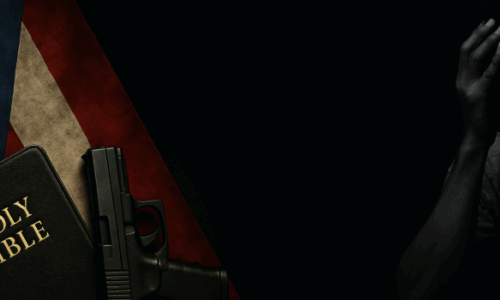
There was a time in my life when the only love I trusted came from men most people would cross the street to avoid.
Some of the brothers I had in the Latin Kings had proven their loyalty in ways most will never experience.
I’m talking about the kind of loyalty where a man steps in front of you when the gunshots start, not thinking twice about what it might cost him.
The kind of loyalty where, with a blade at your throat, another brother puts himself between you and danger without hesitation.
It wasn’t the kind of love you find in greeting cards or Sunday sermons.
It was raw. Fierce.
It came without conditions, but it also came with a price.
And when you’ve felt abandoned by the people who were supposed to protect you, that kind of loyalty feels like home.
I wrote my memoir out of necessity, not to relive the darkness, but to emerge from it. Every chapter is a testament to the ways trauma both shaped me and nearly consumed me. But more than that, it’s proof that transformation isn’t only possible, it’s vital.
I learned early that trauma can become your identity. As psychiatrist Bessel van der Kolk reminds us, “when trauma becomes your identity, that’s a dangerous thing” (Financial Times, 2024). That was me, defined by survival, breath held by the weight of unspoken pain.
Yet healing demanded a different truth. Ebonee Davis captures that painful shift perfectly: “People are afraid to heal because their entire identity is centered around the trauma they’ve experienced. They have no idea who they are outside of trauma and that unknown is terrifying” (Mental Health Center Kids, 2023). I didn’t know who I was outside of the streets, the betrayals, the numbness. That unknown terrified me too.
But here’s what happened, I kept telling the story. Therapy helped me uproot the shame. Fatherhood grounded me. Faith softened me. I began to see myself not as someone who simply survived, but someone who could thrive. Psychologists call this post-traumatic growth: experiencing positive, meaningful change after profound adversity (Tedeschi & Calhoun, 1996).
In naming my sons, Daniel, Isaac, Joshua, I built something sacred from my past: a legacy of judgment, laughter, and salvation. These names are not just words—they’re prayers.
Writing this memoir wasn’t about performance. It was an act of recovery. “The conflict between the will to deny horrible events and the will to proclaim them aloud is the central dialectic of psychological trauma,” says Judith Herman, and sharing my truth was where my healing began (Herman, quoted in Goodreads).
I don’t share this story because I’m proud of every choice I made. I share it because the scars tell the real shape of love, resilience, and redemption, not the glory.
If there’s one thing I hope you take away, it’s this: trauma may warp identity, but healing reclaims it. You aren’t defined by the worst you endured, you’re shaped by the strength it took to face it, piece by painful piece.
—Gregory G. Camacho